
In a market with limited resources, the idea of doing more with less isn’t just a mantra for efficiency; It’s a call for necessary innovation. Luckily, as the saying goes, necessity is the mother of invention. And our current climate is ripe for innovation—if we set ourselves up for it.
There are many different elements of innovation, including identifying, iterating, and releasing new products and services. But one major component that is often overlooked (or at least misunderstood) is divergent thinking, which boosts the chances of creating business value and enables innovators to think outside the box beyond typical responses, processes, and expectations.
When divergent thinking isn’t overlooked, it’s often misunderstood, as it tends to be implemented solely when ideating or brainstorming. What many organizations fail to realize is that you can apply divergent thinking within existing processes, services, and products (not only when trying to develop the next big thing).
There are limitless opportunities within the day-to-day grind to boost value and improve efficiency—and we’re going to show you how to identify them.
What is divergent thinking?
Divergent thinking is a way of thinking that involves generating various unique and creative ideas in response to an open-ended question or problem. Unlike convergent thinking, which focuses on finding a single correct solution, divergent thinking promotes exploring multiple perspectives and possibilities.
Embracing divergent thinking can uncover brilliant solutions and ideas that otherwise would remain undiscovered or unexplored. And in such a competitive world, that could mean all the difference in your org.
To find out just how organizations can maximize divergent thinking, we talked to Christopher Bailey, principal professional services consultant at Lucid, who has over a decade of experience in helping orgs innovate.
Benefits of divergent thinking in the workplace
The beauty of divergent thinking is that its benefits can literally be endless. Here, we will break down just a few. As mentioned before, these benefits will be most impactful when applied to all parts of your business model, top to bottom.
-
Allows you to assess ideas from multiple perspectives
In our book, this is a win-win. Yes, assessing ideas from multiple perspectives is powerful for reaching different segments of the market. But when you’re welcoming insights and diverging on everyone’s perspectives, you’re also more likely to come up with solutions that solve multiple problems at once.
-
Fosters empathy for (and appreciation of) differences
Hearing others’ perspectives and considering divergent solutions encourages empathy for problems others are attempting to solve so you can better understand and learn from others— team members and customers alike.
-
Boosts employee engagement and satisfaction
Divergent thinking promotes quantity of ideas over quality. When individuals don’t have to worry about coming up with the best idea, they’ll feel empowered to come up with any idea, maximizing the synergetic brain power of your team.
“This shift in culture boosts enthusiasm within orgs, encouraging self-expression, risk-taking, and cross-functional empathy,” said Bailey. “Plus, it creates a sense of ownership of results since team members had a greater hand in the ideation process.”
-
Sets your org apart from competitors
As team members identify new opportunities and creative ways to solve problems or improve processes, you’ll collectively discover truly innovative ideas that are a strong combination of novelty and efficiency, boosting business value overall. Because many organizations don’t actively look for opportunities to apply divergent thinking in their daily tasks, those that do will be at an advantage—they’ll find differentiated opportunities to help their business stand out that they wouldn’t have found otherwise.
Identifying opportunities for divergent thinking
As mentioned before, formalized brainstorming sessions are common places to apply divergent thinking. But to maximize opportunities for divergent thinking, everyone should adopt it, everywhere—from product management to project management to marketing to IT.
Here is a brief checklist of questions to consider when identifying good opportunities to apply divergent thinking:
- Is there a way to tighten up a process? What about combining processes?
- When’s the last time you’ve critically examined how you’re completing your day-to-day tasks? Are there any routine tasks you’ve never questioned your process for?
- Are you looking to save time or resources in your day?
- What could you do to level up the value of the day-to-day tasks you’re completing?
If you can answer affirmatively to these questions for your team, then you’ve likely got a solid situation for incorporating divergent thinking into your workflow.
Bailey offers specific examples of situations where divergent thinking could be useful:
- Someone is looking to build a vision for a team and wants to explore different options.
- A product team needs to explore different ways they can address customer goals quickly.
- A marketing team is doing a premortem on a campaign and wants to explore possible ways it could fail so they can address concerns proactively.
- A risk management team needs to brainstorm ways that a system could be compromised, then consider various mitigation options.
- A project team wants to build their benefits case and needs to include some creative elements so it’s more enticing to work on.
- An HR professional is looking for thoughts on how they can creatively reply to a unique personnel request, like handling a relocation or offering recognition with a low budget.
4 best practices for incorporating divergent thinking into your org
Divergent thinking shouldn’t be approached linearly (again, we’re thinking outside-the-box here), but here are some suggestions for best practices as you seek to prioritize it throughout your org.
Train your team
Most of your team members are likely comfortable offering ideas in large ideation sessions with a facilitator, but they may need some help understanding what divergent thinking looks like without those constructs. You’ll want to show them how to do it before taking the proverbial training wheels off.
Start with an empowered facilitator who can lead out in teaching the team to think divergently. It can be a team leader, a project manager, a product manager—just someone who can own the conversation.
Looking for a resource to master creative facilitation? Learn the skills you need to guide your team from complex problems to creative solutions with our free course pathway. Plus, earn a digital badge for your LinkedIn profile upon completion.
Check it outThe facilitator should pick two to three places that feel like an easy lift to apply divergent thinking to and invite team members to make it part of their workflow. Sprint sessions, 1:1s, or regular daily/weekly tasks are great places to look first.
Guide team members in practice activities where they ask themselves questions and identify opportunities to maximize value or increase efficiency for these.
Once individuals learn how to apply divergent thinking more broadly, they can then start applying it to different areas and scale it down to accommodate different types of needs.
Don’t forget to set parameters to keep the ideas focused and clarify the problem you’re trying to solve. Facilitators should be transparent on what solutions will actually be possible to implement. For example, don’t say, “The sky’s the limit” when you’re strapped for resources. Be clear on what solutions are viable by providing examples of what a good idea looks like.
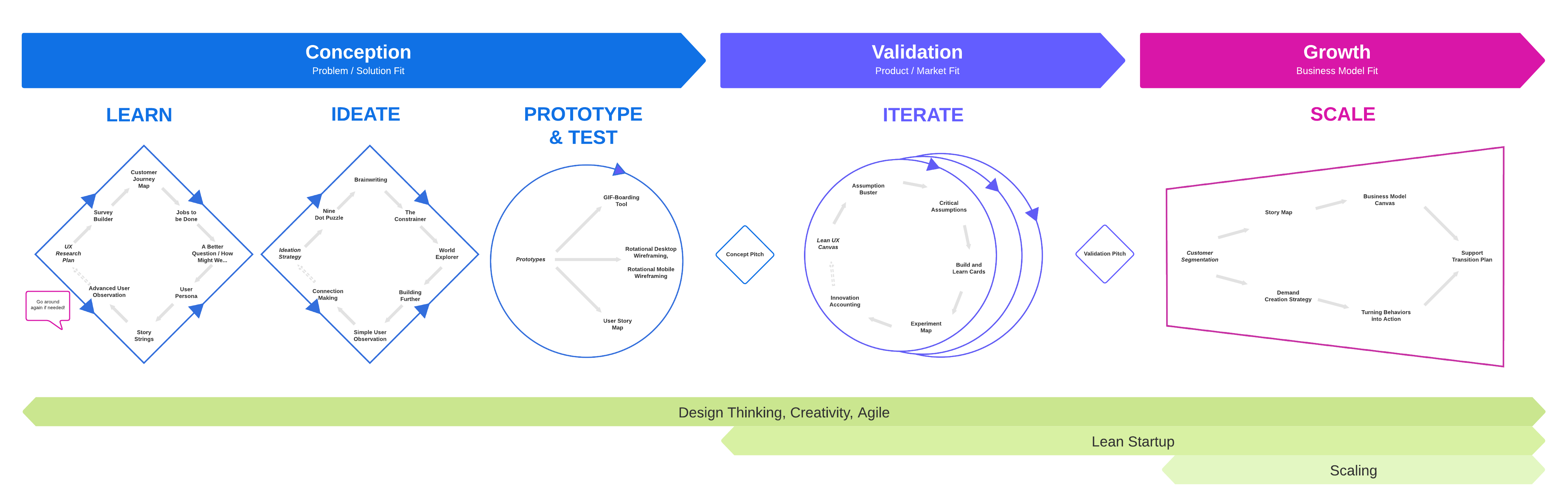
Lucid offers dozens of templates to get you started training your team. Creatively solve problems by exploring beyond your frame of reference with this world explorer template, or take your problem-solving outside of the box with this nine dot puzzle activity.
Work visually
Visual collaboration platforms like Lucid can help create an ideal environment for divergent thinking and innovation. When compared to static documentation, visuals encourage a space for experimentation and learning since they’re a much more dynamic format.
Not everyone collaborates the same way—in fact, our research shows that there are three distinct collaboration styles. A visual collaboration platform makes it easy for everyone to contribute—not just the loudest voices—regardless of their style of collaboration. When every individual has the resources to collaborate in the way that works best for them, team members can better engage with each other's ideas and do their best work.
Creativity in the workplace is a vital component of divergent thinking, and it can be difficult to foster it on distributed teams when there aren’t opportunities to riff on ideas and collaborate in real time. But according to our research, 97% of managers and 89% of employees who used virtual whiteboards felt they were effective at facilitating a collaborative team environment that will ultimately increase productivity and creativity.
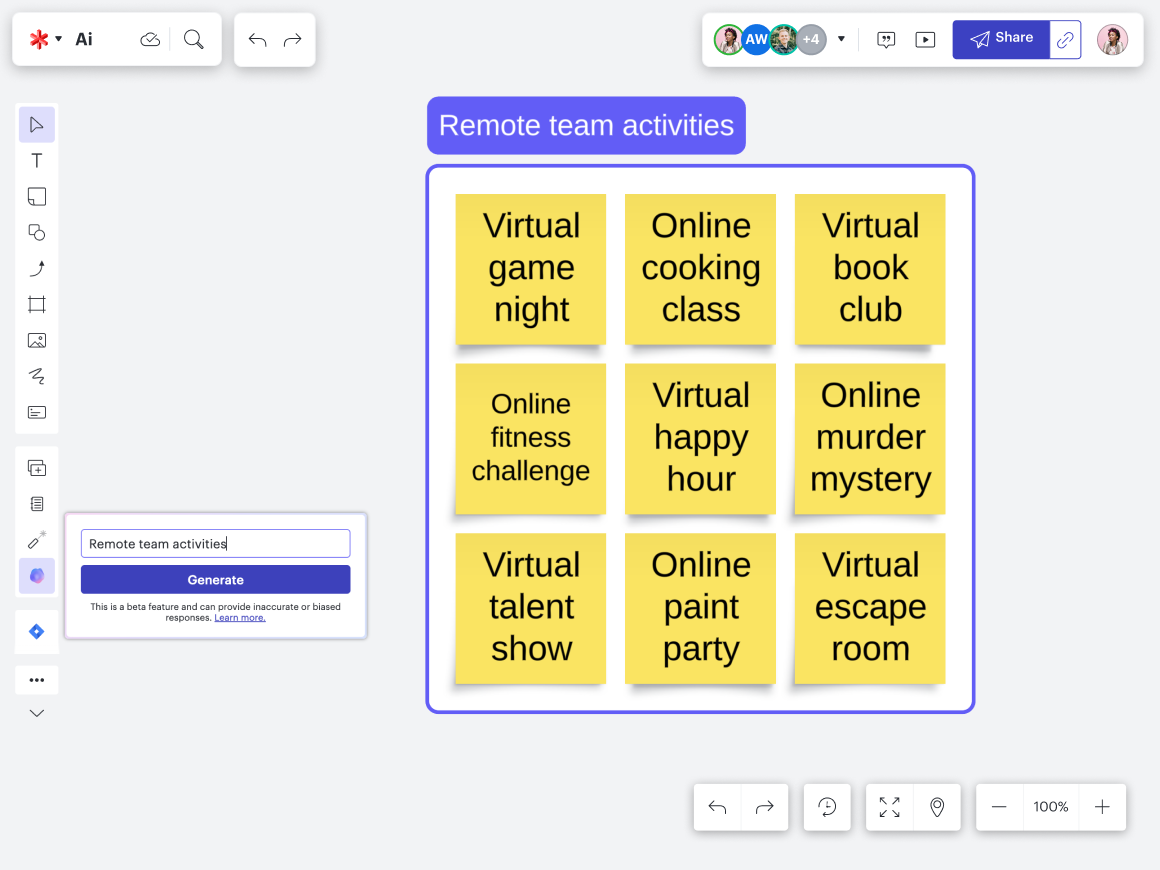
And with Lucid’s Collaborative AI, your creativity can expand beyond what was previously possible. Collaborative AI is dynamic functionality that enhances divergent thinking by helping you explore ideas and spark new opportunities and solutions that you may not have recognized before.
Strengthen team bonds
Because quantity is more important than quality when it comes to divergent thinking, it’s vital that team members feel comfortable voicing their thoughts and opinions with each other when promoting innovation. Prioritize team building activities and regular icebreakers or check-ins to build this foundation of comfortability. Cliche hand-holding activities aren’t necessary—but a welcoming culture of inclusivity is.

Explore some of our all-time favorite (actually fun) hybrid team building activities.
Check them outEncourage team members to ask questions and implement a process to suggest ideas. Then make a plan for disagreement. Divergent thoughts shouldn’t feel scary; they should be welcomed. Consider inviting a leader or expert to join the discussion to share an opposing or unpopular idea in an effort to make it “okay” for others to do the same. Or, nominate a disagreement advocate in the room who can look for signs that others may disagree and either invite the dissent or be a conduit for surfacing those thoughts.
Last, thank individuals who share alternative positions. Reward successes and failures—even if they flop. Not all divergent thinking will yield perfect results, but if you aim for perfection, you’ll miss out on opportunities for brilliance.
Foster a culture of creativity
Divergent thinking starts with hiring talent with cross-functional backgrounds to ensure a diverse set of participants. Then, offer a wide variety of opportunities to get involved, boost skills, and further learning. Learning and creativity go hand-in-hand with divergent thinking. Whether you’re offering offsite activities, special interest clubs, or topic-specific workshops, it’s important to encourage team members to pursue knowledge and interests.
Consider implementing policies that further this culture of creativity. Encourage setting aside a certain percentage of weekly hours or a block of time during the week specifically for innovation. When possible, examine PTO policies to account for time for personal interests or provide opportunities to go on workcations so employees can experience a change of scenery and a renewed opportunity for creative ideas.
Bailey expounds on the significance of this culture:
“At the end of the day, one of the biggest reasons you bring in divergent thoughts and push creativity further is to create connections between things that didn’t exist before. Whether that means you bring someone outside your team into a discussion or that you create space for people to engage in learning things outside their job, divergent thinking creates the bedrock for connections between analogous worlds and drives creativity.”
This list may be linear, but you won’t achieve divergent thinking with a checklist. Rather, it requires a shift toward a culture of creativity that extends beyond any one activity or session and touches every department and team member in the org.

Dive deeper into innovation by learning how to use an innovation framework that turns ideas into action.
See the guide